Hope and the jumping bean

I was inspired to try my hand at a bit of fiction by One Frazzled Mum’s writing in response to The Prompt linky on Mum turned Mom. This week’s prompt is hope. Please be gentle with me. I haven’t tried to write fiction since I was about 12. This is completely made up and not autobiographical or about any real person.

Hope stands at the window looking at the driving rain. She loves being indoors in her warm home while rain batters the window and the branches of trees bend in the wind. She cracks the window open and takes a breath of the air that smells of dry soil stirred by raindrops.

The rest of the house is silent and empty. She walks to the sofa and picks up her phone. No messages. No notifications. She opens up her Facebook app and starts scrolling.

All of the usual stuff is there. A friend from school who works as an estate agent has closed on another mansion. Political posts. Someone baked a cake. Someone else is on holiday. Several people have adorable children.

Hope checks her watch. Another ten minutes has passed. Some people think she’s old fashioned for wearing a watch. Most people just look at their phone. If she did that, she would have lost her phone a hundred times over. She checks the time a lot. She lives by the clock.

She hears the key rattle in the lock and feels that familiar little jump of happiness in her chest every time her other half comes home. It mixes in with all the nervous flip flops that were cavorting in her stomach and makes her feel sick again. As her partner, Peter, walks in the door, she rummages in her handbag for a piece of gum.

“Oh finally you’re back! We’re going to be late,” she says, anxious and distracted at the same time. She finds the pack of gum and pops a piece in her mouth.

“We’ve got plenty of time!” Peter says brightly. “Are you ready to go then?

Hope smacks her gum loudly and gives him a look. “What do you think?”  Then she stands up, grabs her coat and walks purposefully out the front door to get in the car. Peter follows.

The radio blares loudly when the car is first turned on. Hope loves listening to the radio on full blast. An Ed Sheeran song is playing. He’s one of her favourite artists, but not today. She quickly changes the channel, then pairs up her phone to the sound system so she can choose what music she wants to hear. Maybe a bit of Iron Maiden. Aggression and no fear.

Hope sits in the car with her hand on her stomach. She can’t feel anything really. Just like last time. She has felt just exactly the same as last time all the way through. A little bit sick. A little bit hungry. A little bit like her bra is becoming too small. Does this mean that it would happen again?

She had told her friends this time. She wasn’t waiting for this appointment. Last time it was harder to tell them when she was already grieving. When they couldn’t understand why she disappeared for a while. Why she was so sad – and is still so sad. Nothing is ever going to bring back what was lost, even if today brings good news.

Peter parks the car and they walk across the car park, through the sliding doors, up the two flights of stairs and down a long hallway. They enter a small waiting room and Hope walks up to the counter.

“I’ve got an appointment at 1:15,” she tells the receptionist.

The receptionist is distracted, doing twenty things at once. She asks, “Do you have your notes?” Hope hands them over. The receptionist takes them. “Take a seat,” she says.

Hope and Peter sit down on the hard plastic seats. There aren’t any magazines in the waiting room. Just various health-related leaflets. Hope ignores them and tries to check her phone, but she doesn’t have any signal. She grabs Peter’s hand and he squeezes hers in return. They wait in silence for what seems an eternity.

A woman calls Hope’s name. Her stomach jumps, flips and ties itself into a knot. Her eyes start to black out a little bit around the edges and she feels lightheaded. She has to take deep breaths to stop herself from total panic.

Hope and Peter follow the woman who called her name into a darkened room. “Right,” the woman says, “just lie down and lift up your top, and we’ll go ahead and take a look.” Mercifully, she doesn’t ask any other questions or say anything else.

“This might be a bit cold,” the sonographer says as she squirts gel on Hope’s stomach.

Hope holds her breath as the sonographer probes her stomach with the ultrasound wand. She pushes the wand into her stomach and Hope hears nothing. She moves it again and again. Hope takes a deep breath and then holds it some more. She closes her eyes tight.

Then, a swishing noise. The sonographer smiles and turns her screen to where Hope can see it. “There we go,” she says, “you take a look while I just take some measurements.”

Hope’s eyes fly open and she looks at the screen. She decides to hold her breath some more while the sonographer draws little lines on the screen with her mouse.

“Everything looks fine,” the sonographer says. Hope breathes out and finally allows herself to look – really look – at the screen. She sees a little jumping bean, full of life and potential.

If you’ve been affected by the issues in this story, please check out Tommy’s for support.

mumturnedmom
Tammymum
Keep Calm and Carry On Linking Sunday

PND and believing you deserve to get help

Recognising the problem

I’ve been procrastinating over writing this post for a while. I’m hoping to publish a series of guest posts on parental mental health, which I’m kicking off with my own contributions. I’ve published my story of anxiety after having my first child, and a guest post on new mums and mental health generally.

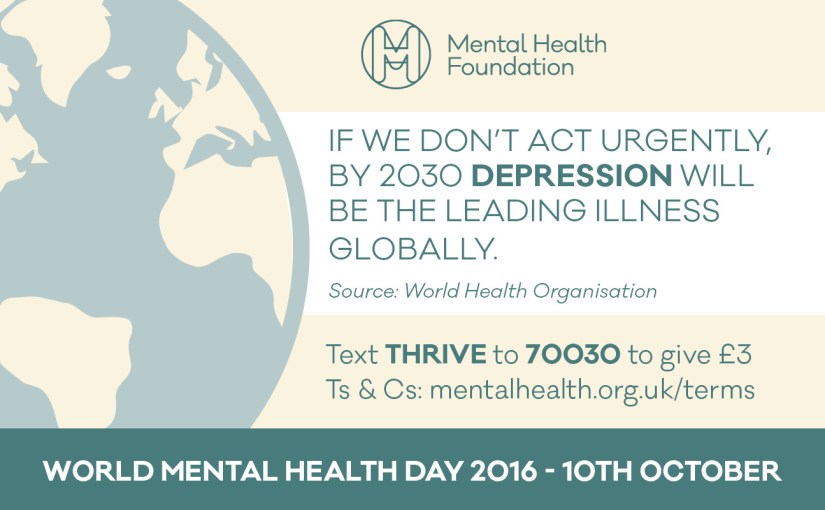
But this post – the story of the PND I experienced after my second child – is the most difficult. World Mental Health day is on 10 October and it’s given me a kick up the rear end to share this story. I’m not sharing it to get sympathy, but because of the fact that I doubted myself. I doubted that I was sick enough to get help. I thought I ought to just get over it.

There is a huge problem in our society in which mental illness is not taken as seriously as other types of physical illness, including within the National Health Service. It is well known that there is not enough help for mental illness on the NHS. It is not clear what help is available and much of the help that is available sits at the top of a long waiting list.

On top of this, many still feel that admitting to struggling with mental illness carries a stigma. This is particularly a problem for women suffering with postnatal depression.

“What if they think I’m a bad mother?”

“What if they want to take my baby away?”

“What if the medication means I can’t breastfeed?”

My story

For me, I was not worried about the stigma, nor intimidated by the difficulties of getting help. It was taking myself seriously that was the problem. I didn’t even realise that I needed help.

I was over the moon at the birth of my second son. I had a natural birth – the thing that I’d wished for and had eluded me with my first. I was also happy that with the second child, I felt that my family was complete. I did not enjoy pregnancy and was incredibly happy to know it was finished and I never needed to do it again. And of course, my son was beautiful, as babies always are.

It’s hard to say if there were any number of factors that contributed to my PND. My baby spent time in special care for feeding problems. Some other things happened to friends and family that upset me, and then we had a house guest that came for a week and stayed for a month. My son was born in November, but by the time February rolled around – that darkest month of the year – I was in a dark place.

I spent every day on my sofa crying. I wasn’t even sure what I was crying about. I felt insecure. I didn’t want to leave the house. Also, I felt so incredibly angry. My older son, who was about 3 years old at the time, was having some difficulties getting used to having a baby brother and that was affecting his behaviour. So he was a little more challenging than usual and I was less equipped to deal with it. I used to bite my bottom lip so hard to stop myself from shouting and exploding with anger. It seemed like my bottom lip was permanently stuck under my teeth. I felt guilty for being angry with my son.

It took me a long time to take my feelings seriously. I blamed myself and my own lack of self-control for the feelings of anger. I called myself lazy and weak for not wanting to leave the house. I felt foolish for feeling sad so much of the time. I had everything I wanted, so what excuse did I have to be sad?

I didn’t think there was anything a doctor could do for me. I thought I just needed to grow up and deal with it. Having a baby and a young child is hard work. I thought it was par for the course. And I kept suffering.

And then one day a leaflet dropped through my door. It was for Ieso Digital Health, an NHS service that offers Cognitive Behavioural Therapy (CBT) via secure instant messaging on a computer, smartphone or table. It said that you could refer yourself to the service, and it didn’t matter if your symptoms were mild, moderate or severe.

The penny dropped. I realised I desperately wanted to talk to someone about how I was feeling.

So I took the leaflet to my doctor and asked her to refer me to the service. It turns out that was the wrong thing to do, and I could have just signed up online without even going to the doctor. In the end, she referred me to a different service that involved talking on the phone instead of online.

I found CBT difficult in a lot of ways, especially over the phone. I think I would have preferred hiding behind my laptop screen. The idea of CBT is that it helps you examine your patterns of thinking so that you can see how they’re being unhelpful to you, and this can empower you to change them.

In some ways I didn’t like it because I felt like I was being blamed for how I feel. But I made an effort to engage with the therapy, and it did help me channel some of my angry feelings when my son was winding me up. The therapy helped me remember logically that he wasn’t doing it on purpose – he was only a young child – and that I had the power to choose how I reacted to it.

The sad and insecure feelings were more stubborn. They hung around until I ran out of birth control pills and forgot to refill the prescription. Within a week of stopping the pill, I started to feel better. I decided to stop taking them altogether and I’ve felt better ever since. It may have been a coincidence, but recent research is showing that depression can be an adverse effect of hormonal contraceptives.

What I’ve learned

My story exemplifies a number of challenges we have around mental health, and maternal mental health specifically. These include:

  • Helping women to take their feelings seriously – to not to be ashamed or afraid to talk about how they’re feeling and to ask for help.
  • Taking mental health as seriously as physical health.
  • Raising awareness of the symptoms of PND and other maternal mental health problems so that people will be equipped to recognise when there is something wrong – not just in themselves but in their friends and family.
  • Increasing the availability of appropriate mental health services on the NHS.
  • Increasing awareness of how to get help on the NHS, and the range of services that are already available.

The leaflet that popped through my door saved me. It came at the right moment. But we shouldn’t have to rely on chance for people to receive the help they need.

If you are feeling down, angry or anxious, please speak to someone. The Mental Health Foundation has a useful list of some of your options for getting help. And if you see a friend or relative struggling, please don’t look the other way.

I would like to publish as many stories about maternal mental health as I can to spread awareness. If you would like to write a guest post with your own story or perspective, please email me: themumreviews (at) gmail.com.

Petite Pudding
Keep Calm and Carry On Linking Sunday

Potatoes ‘Bravas’ with chicken recipe

My husband is Portuguese South-African, and I’ve grown to love paprika in an unusual way. Chorizo is something special; if you’ve never tried cooking with this sausage, I encourage you to try this recipe and discover the joy. I try to find a good quality, hard chorizo, simply because most ‘cooking’ chorizo is incredibly fatty. If you can’t find any, don’t worry, the recipe calls for it optionally for depth of flavour.

potatoes-bravas-pinterest

This is a take on the Spanish patatas bravas: crispy cubed potatoes heavily spiced and fried. I try to keep midweek meals to one pot, and this is a good one if you add chicken strips/chunks to the pan. My kids are big fans of sweetcorn, so I always keep a tin on hand. With this dish, it adds a crunchy sweet freshness that curbs some of the spice. I usually drain the corn, but keep it room temperature and sprinkle on like a sort of veggie crouton.

If I don’t have a lot of time to stand at the stove, this is also a fabulous tray bake for about 40 minutes in a 180C/375F oven. I try not to use too much oil and salt, but you can use your judgement and taste buds for this quick, flavourful meal. It usually only takes twenty minutes to cook, if the potatoes are in small cubes, and it’s something I fall back on if I’m short on ingredients. Most are staples I have on hand, and it takes very little prep.

chopping potatoesYou’ll need:

  • 1 or 2 white potatoes, peeled and cubed
  • 1/3 cup chopped red or white onion
  • 1/3 cup roughly cubed chorizo sausage (optional)
  • 2 tsp veg oil of choice
  • 1 or 2 chicken breasts sliced into strips
  • 1 tsp garlic granules
  • ½ tsp paprika
  • ½ tsp cumin
  • ½ tsp oregano
  • 1 tsp salt (to taste)
  • 2 TB chopped tomato
  • Approximately 1 cup sweet corn

The method:

If you’re lucky enough to have found a lovely chorizo, start with slicing and quartering about a 1/3 of a cup and add it to the warming pan. I use a cast iron pan, but you can also use a wide-based pan that’s good for browning.  I keep the temperature around a medium-high while the chorizo warms and begins to run paprika juices – it smells amazing!

Add the onion and potato to the oil produced and stir until they are coated with the colourful paprika oil from the chorizo. Then add the veg oil and dry spices, coating the potatoes evenly before leaving them to brown.

spices and potatoes in the frying pan

If you aren’t using chorizo, add the oil, potatoes and onions all together with the dry spices and give it a good mix before leaving to fry over a medium high heat.

Stir infrequently to allow colour to form on all sides of the potatoes. If the spices begin to stick to the bottom, rather than adding more oil, try adding a splash of water from the kettle and gently scraping the bottom of the pan with a spatula. This will also help soften the potatoes in the steam produced.

While the potatoes are softening, I slice up the chicken into small, even strips that will cook quickly. If you’re going for the tray bake, try to keep the chicken pieces a little larger so you can put everything in at the same time and they won’t be overdone.

Add the chicken to the potatoes before your next scheduled stir, and toss everything together to coat the chicken with the contents of the pot. Again, refrain from too much stirring so you’re sure to get good colour on most sides of the potato cubes and chicken.

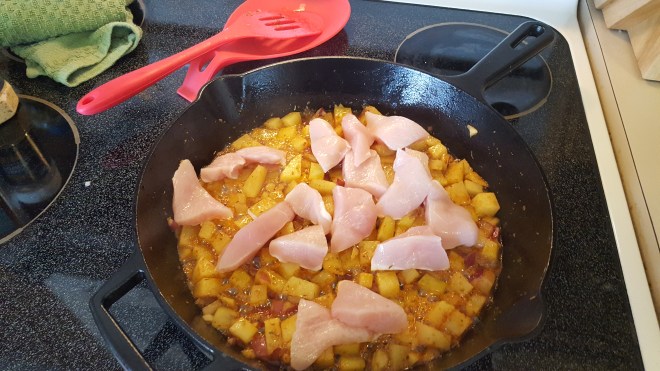
raw chicken added to potatoesAdd the chopped tomato and give it another good mix-in. The chicken should be cooked after 10-15 minutes, and the tomato adds a bit of tenderising acidity.

You should be able to break a piece of chicken apart easily with your spoon, and the same again with a potato cube, after 20-25 minutes.  Drain your sweet corn, or slice from a fresh cob if it’s the right season.

Potatoes bravas in the pan

Plate up with a sprinkle of corn over the bravas, and enjoy! My kids don’t even ask for ketchup with this, because the tomato and spices in the dish keep it moist. The chicken stays tender and flavourful for the quick cooking, and I’m in and out of the kitchen in no time.  If I’m really pressed for time, I toss everything together into an oven tray and check on it for a stir every 15 minutes until it’s done. Either way, it’s a winner, winner chicken dinner in my house!

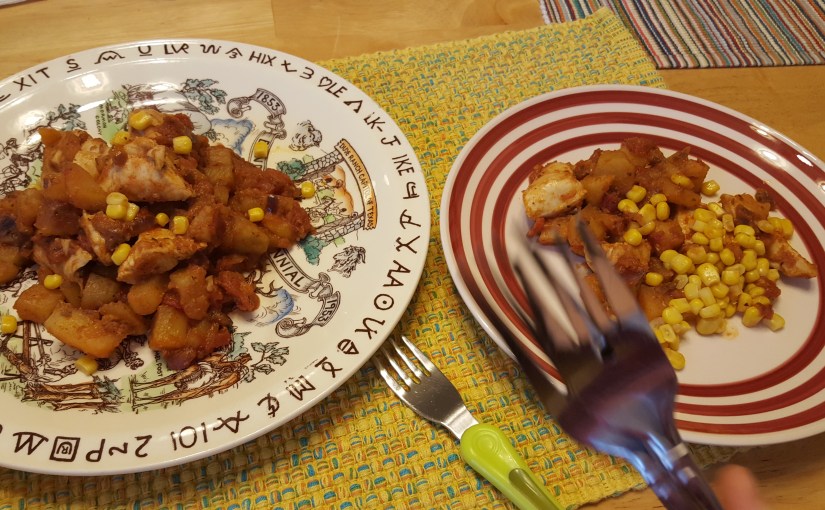
dinner-plates-with-food

Sparkly Mummy

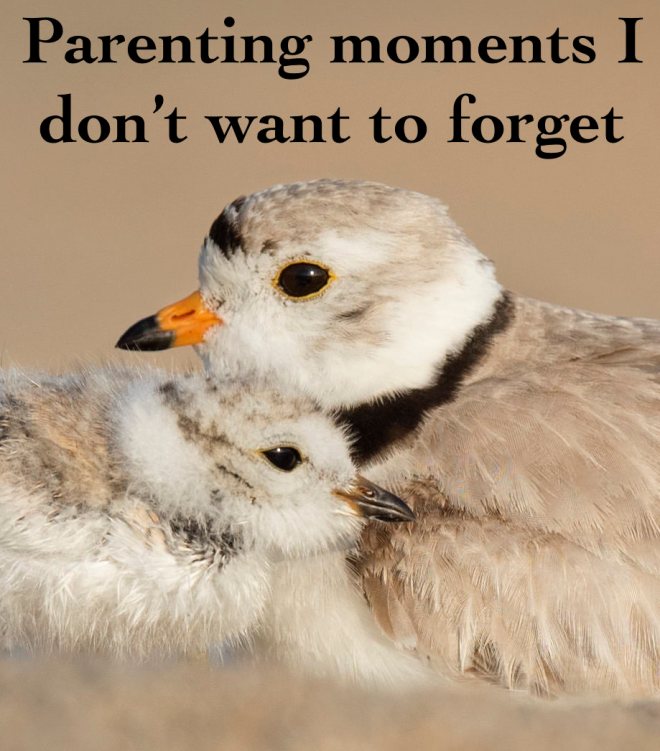
20 parenting moments I don’t want to forget

20 parenting moments I don't want to forget

I’ve been talking a lot about some the harder parts of parenting, so I’m trying to add a few happy posts to balance it all out. To quasi-quote Obi-Wan Kenobi, I would like to bring balance to the force, not leave it in darkness.

Obi Wan Kenobi

Sure, I still have to wipe a lot of bottoms and noses and clean up the odd bit of sick. Yes, it’s true that they both wake up multiple times every night and I am always tired. But there are some wonderful things happening right now, and some things that happened not too long ago that I want to hold in my heart forever.

I wish I could bottle these things and save them for later when they’re long gone. There are hundreds of photos and videos, but some moments can’t be captured by a camera.

So here is my list of 20 early years parenting moments that I don’t want to forget:

  1. When one of them sits on my lap and I bury my face in his hair. The smell of the baby shampoo and the soft texture of the babyish hair (never mind the possibility of the odd nit).
  2. The half-a-minute each day when my boys show their brotherly love for each other – a shy little cuddle, sharing a bit of food, or playing nicely without it ending in a screamfest.
  3. The way my toddler dances with pure joy to any music at all. Even the ring of a mobile phone.
  4. All four of us snuggling in bed together in the early hours of the morning.
  5. The way my eldest never stops talking and loves to explain how things work (putting his own fanciful take on it, of course).
  6. Hugging both of them on the sofa and watching kid’s movies on lazy Sunday afternoons.
  7. The snorty mcsnuffles sound my youngest makes while contentedly sucking his dummy.
  8. The day each of them first gripped my finger with their tiny hands when they were newborns.
  9. The feeling of having them fall asleep in my arms.
  10. My toddler’s hilarious forays into talking (yelling ‘caaat’ at the cat and saying ‘beep’ while touching your nose), which he refuses to perform while the camera is recording.
  11. Watching CBeebies. My eldest is starting to move on to CBBC and I’m really going to miss Mister Maker and Iggle Piggle.
  12. The way my boys cuddle their soft toys. We grow up to think boys aren’t as sentimental as girls but that is not how it begins.
  13. Getting to choose what clothes they wear every day.
  14. Reading them stories. My eldest is starting to read the stories to me now, which is also nice, but I was loving the sound of my own voice. 😉
  15. Holding their little hands. Having them not be ashamed to hold my hand anytime in public.
  16. Having them jump into my arms when I pick them up from childcare/school.
  17. Answering endless “why” questions.
  18. The way they play so happily together when they’re in the bath. I often dread bathtime, but someday they’ll be too big for bathtime together with mummy presiding.
  19. The way my eldest says “I love you mummy”. And I say “I love you too”. Then he says, “That’s great.”
  20. Singing them to sleep.

What are your favourite moments with your children? If you could bottle one thing from their early years, what would it be?

Obi-Wan photo by Wacko Photographer [CC BY-SA 2.0 (http://creativecommons.org/licenses/by-sa/2.0)%5D, via Wikimedia Commons

Diary of an imperfect mum
Keep Calm and Carry On Linking Sunday
Tammymum

New mums and mental health

A guest post by Sally Hogg

I remember when my son was born, people kept asking ‘are you enjoying being a mum?’ The answer in the very early days, was probably ‘no’. It got better, but it wasn’t fun at first. Yes, he was absolutely amazing and wonderful. But I hurt. I kept crying for no reason. I was so very, very tired. I worried whether I was doing things right, and – to be honest – I missed my old life. This was a momentous time, but it wasn’t enjoyable at first.

But I never said ‘no’ to that question. It was loaded with expectation. Asked by grannies, aunts and older mums who look back at motherhood through rose-tinted glasses.

Are you enjoying being a mum? New mums & mental health

There are many reasons why it’s hard to admit that you’re not having a great time as a new mum. It seems as if everyone else is doing fine and having a magical time. It seems like everyone expects you to be on top of the world, and it feels like failing – and perhaps a betrayal of your baby – to say that you are struggling.

Yet most, if not all, mums will struggle at some time. And for a significant proportion, this struggle may not simply be the normal rollercoaster of new parenthood, but something more serious. Between 10 and 20% of new mums (and around 5-10% of new dads) experience a mental health problem during pregnancy or the first year after their baby is born. To put this in perspective, it means that in any typical antenatal class or baby group, there is likely to be at least one person in the room who has a mental health problem.

Whilst postnatal depression is well-known, mental health problems for new parents are not just postnatal. In fact, experts now suggest that depression is more common in pregnancy than postnatally. Problems go wider than depression too. They can include, for example, anxiety, OCD, PTSD, psychosis, and eating disorders. Some of these problems will occur for the first time when someone becomes a parent, others may be the recurrence of an existing problem – perhaps one that has been well-managed for many years. Some people with pre-existing conditions are particularly at risk: any woman who has ever experienced bipolar disorder, for example, has a 50% chance of mental illness in the weeks after birth, although this can be very effectively managed with specialist help in pregnancy. The severity of mental health problems varies too. Thankfully, most will be relatively mild, but this is not always the case: suicide is actually one of the leading causes of maternal death in the UK.

Mental health problems can be very effectively prevented or treated with the right help, which is why it is so important to speak out early if we think something is wrong in ourselves, our friends or partners. If you feel you or someone you know has a mental health problem, trust your instincts and talk about it. It may be that they are just having a few bad days, but they will still benefit from a supportive conversation and, if they are ill, the sooner they can receive help, the better.

There are a range of options available to prevent, reduce or treat mental health problems. These include support groups, counselling or other forms of psychological therapy, or medication. The best option will depend on the nature and severity of a mum’s illness and her own personality and preferences. Midwives, health visitors and GPs should ask all expectant and new mums regularly about their mental health, and should be able to signpost mums to different sources of support.

There are also things that we can do ourselves to improve our mental health. These may be enough to overcome mild mental health problems, but won’t be sufficient in themselves for women who are more seriously ill. Activities associated with reducing depression and anxiety include socialising, exercising, getting more sleep, and active relaxation (things like mindful mediation or having a massage). These can feel very hard to do when you have low mood and a new baby, which is why it’s good to talk to family and friends so that they can help you to take care of yourself.

Sadly, there are gaps in services in the UK, and some professionals don’t have the skills and knowledge they need to detect mental health problems and give women the support they need. You may need to be persistent and assertive in order to get help.

Things are improving though: the Maternal Mental Health Alliance (a coalition of over 80 charities and professional bodies) is doing a lot to raise awareness and improve services, and earlier this year, the Government announced over £350 million to fund new services.

Parenting is a rollercoaster, and it’s not one that we’ll always enjoy. For most new mums, the highs of this rollercoaster should far outnumber the lows, but a significant minority will be less fortunate. If you feel the balance isn’t right, don’t suffer in silence. You aren’t alone and things can get better.

Sally Hogg is chair of the Oxted & Caterham NCT branch. She also runs the Mums and Babies in Mind project for the Maternal Mental Health Alliance.  They offer some useful self-help guides about recognising and facing maternal mental health issues.

I would like to publish as many stories about maternal mental health as I can to spread awareness. If you would like to write a guest post with your own story or perspective, please email me: themumreviews (at) gmail.com.

Petite Pudding
Tammymum
Diary of an imperfect mum

What you really need (& don’t need) for your new baby

Oh the consumerist excitement that comes with a first pregnancy! One of the only consolations for the lack of alcohol and sushi during my first pregnancy was the prospect of shopping, shopping, shopping. And as I’m a project manager during my day job, I was obsessed with making sure that I had everything I needed all perfectly ready for the day the baby arrived.

My poor second baby was lucky that I bought him a new cot mattress.

Only because I’d already bought everything under the sun for my first, and we still had all those things. Some of them hadn’t even been used yet.

The internet will reveal countless lists of what you “need” to get for your baby. I duly studied these, collated them into a final list, and created a spreadsheet, including an estimate of my total projected spend. Seriously.

So I would like to save someone out there from going totally overboard like me. Therefore, here is my (hopefully) no-nonsense list of what I think you need before the baby comes, what you should wait to get until after the baby comes, and what you can leave in the store.*

baby clothes.jpg

What to buy before your baby comes

  • A cot for the baby to sleep in (obvs) and a brand new cot mattress.
  • A moses basket is also useful because the baby can then sleep in the living room or wherever you are around the house. But I would try to get a hand-me-down or charity shop one because you only use them for about 3 months and they can cost upwards of £60.
  • Bedding for the cot and moses basket: 3 fitted sheets for each.
  • 3 small cellular blankets to use for swaddling and out & about.
  • Those baby sleeping bag thingys. Gro-bag is the main brand but Asda does some brilliant (much cheaper) ones. They really are the best things for babies to sleep in right up until they move into a bed.
  • 8 all-in-one sleepsuits. Baby can stay in these day and night. White is a popular choice but I prefer colourful ones that hide the poo stains. These often come with built-in scratch mitts too – the stand-alone ones will be lost immediately.
  • 1 little newborn hat for right after baby’s born. I never used hats again until baby was much older.
  • My opinion is that you only need vests if it’s summer and very hot – and then baby can wear that on it’s own.
  • A couple cute jumpers/cardigans.
  • A cute little pramsuit or other warm going-outside suit. I like the ones with ears on the hood.
  • Nappies, nappy sacks & wet wipes along with a good changing mat.
  • A pushchair. For some they are practical; for some they are fashion. Up to you – but make sure:
    • you can fold & unfold it one-handed
    • you can put the brake on & off without struggling
    • it has a raincover and cosy-toe
    • it will fit through narrow doors and down the aisle of a bus
  • A carseat.
  • A playmat with flashing lights & music. I left mine laying on these for long periods of time.
  • A vibrating bouncy chair. This is a godsend when you need to get stuff done.
  • A baby bath or bath support & some baby bath soap.
  • Cotton wool pads (not balls). When they are really small you can use these for cleaning tiny poos and also wiping gunge off eyes and noses. You will quickly move on to wet wipes though.
  • Muslin squares, like 20 of them. You will go through loads of these.
  • A changing bag that makes you feel happy. Treat this like a handbag purchase because you will take it everywhere.
  • Even if you’re planning to breastfeed, get a steriliser, about 2 small bottles, a bottle brush and some made-up formula milk in those sterile bottles. The pre-made baby milk is perfect for midnight feeding panic moments.
  • If you’re planning to formula feed, I would go ahead a get a full pack of formula powder as well.
  • Metric arseloads of maternity pads.
  • 1 box of breastpads.
  • Lanolin nipple cream.
  • Hand lotion (your hands will be messed up by all the post-nappy-change hand washing)
  • Chocolate.
  • A couple of nursing bras in a size larger than your maternity bras, but don’t spend too much because your breasts will change and you will need to perhaps get different sizes after the baby comes.

Wait until after the baby comes to get…

  • Lots of bottles. You may find that your baby doesn’t like the teat on the bottles you bought, and so you’ll have to experiment. You’ll be annoyed if you buy a whole collection of one type of bottle and they don’t work.
  • A breastpump. You might be introduced to the magical world of breastpumps while you’re in hospital. This may well change your perspective on what sort of pump you would like. You may also decide you don’t need one. Don’t get a manual one!
  • A sling or baby carrier. Check for a sling library in your local area and try these out with your baby before buying. There’s a lot of marketing around these but everyone is different as to whether they can actually get the damn thing on.
  • Baby toys. People will probably buy these for you. If not, you can always order some online.
  • Dribble bibs. Not all babies dribble until they’re seriously teething, which might be months later. You can use muslins to catch milk drools. Wait until you need the bibs.
  • A nursing cover. You may find you want one, and you may not. Wait until you feel the need as they are pricey.
  • Same goes for nursing pillows. I just used a throw pillow or normal pillow.
  • Extra bottle-feeding equipment such as bottle warmers & carriers. You may find these aren’t necessary for the way you manage bottle feeding.
  • Nappy cream. My babies never got any nappy rash until they were much older and then my health visitor recommended different sorts of creams than I would have bought in my pregnant state.
  • A baby monitor. You’re not really meant to have the baby sleep in a separate room until he/she is 6 months old, so you might as well wait. The technology changes fast and it will be better to get a newer model.

Things you don’t even need

  • Non-bio washing detergent. Unless unusually sensitive skin runs in your family, I could never see any issue with using bio. It gets out the poo a lot better.
  • Baby socks. Baby socks are the world’s most pointless things. They fall off immediately. If you must have some for cuteness purposes, invest in some sock-ons. Those things work pretty well. Booties are also purely for cute and you will probably receive at least one pair as a gift.
  • Special towels for the baby. Hooded towels are cute, but if you use a normal bath towel you can make it kind of hood-like without spending extra money.
  • Cot bumpers. They are pretty but they’re dangerous for baby. So you’ll just have to take them off before using the cot which you won’t want to do when you haven’t slept for more than 2 hours at a time in the last week.
  • Top and tail bowl. Sometimes these come in cute packages with the baby bath, and you can get one if you want, but you can just use any old bowl!
  • Nursing tops. I found that these exposed more boob than just lifting up a standard (more attractive) top. If you like wearing dresses though, nursing dresses are worth the investment.
  • An Angelcare mat. These are mats that monitor your baby’s movements and set off an alarm if they don’t move for a period of time. These will send your nerves into overdrive as you will get lots of false alarms. My sons had them in hospital and they went off several times a night for no reason whatsoever.

What were your must-have baby items? What things did you buy and never use?

*Disclaimer: This is all just my opinion based on experience. I’m not an expert on shopping … but I’ve had a lot of practice.


Recipe for Albondigas (Mexican Soup)

This is a recipe that’s been handed down in my family and adapted for family life. My grandfather, the chef of the house, would take the time to make meatballs, as the standard Albondigas is a meatball soup, but over the years I’ve fallen out of using that method. It is a different experience to have moist meatballs with broth, but this recipe maintains all the flavour without all of the fuss.

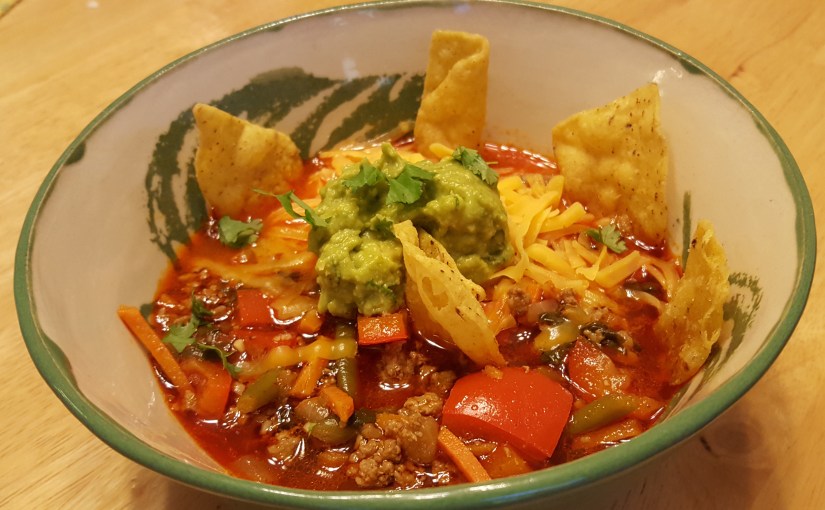
This recipe is my version of a traditional family chicken soup: perfect for a cold! It’s also a celebration soup; it’s on the back burner at most family gatherings or parties, ready for anyone to scoop up a bowl with a few corn chips and some guacamole on top. It’s truly a delicious, healthy dish that emits amazing aromas all day.

I serve this soup over rice for my kids, draining a fair bit of broth, but loading meat and veg onto the top. They love guacamole, and the promise of a few corn chips for dipping. My son especially likes shredded cheese on top, and my daughter likes soured cream. My husband and I prefer a nice deep bowl with a handful of corn chips crushed on top, a handful of shredded cheese and dollop of guac. The cheese gets gooey and gorgeous, and the corn chips soften, adding an almost enchilada flavour that’s divine.

This post includes my coveted guacamole recipe as well, so make sure you have a couple of ripe avocados on hand (or more), and a bag of salted corn chips for dipping. You can make this soup as thick or as brothy as you like, and it gets better as it simmers. It freezes well, if you make a big batch, and can be stored for quick dinners another day. If you’re only making this for a grown-up crowd, add plenty of chilli to kick up the heat – it won’t disappoint.

Mexican albondigas soup.jpg

You’ll need:

  • 1 tsp vegetable oil
  • 1-1.5lb ground/minced beef
  • 1 TB minced garlic
  • 1 cup chopped white onion (I use frozen)
  • 1 tsp ground cumin
  • 1 tsp smoked paprika
  • 1 tsp dry oregano
  • ½ tsp (or more) chilli powder or chilli flake (optional)
  • 1 tsp or 1 cube beef stock concentrate
  • 1 cup shredded/grated carrot (about one medium carrot)
  • 1 can chic peas/garbanzo beans drained and rinsed
  • 1 can chopped tomato (optional, but don’t use crushed – you want chunks of tomato)
  • 1-2 cups topped, tailed and halved green beans (I use frozen in a pinch)
  • 1-2 cups chopped coriander/cilantro with stalks (usually one good sized bunch)
  • ½-1 cup chopped red pepper
  • 2 med ripe avocados
  • 1 tablespoon lime juice
  • 1 teaspoon (or more) garlic powder or fresh garlic
  • ½ teaspoon cumin or smoked paprika or both
  • Salt to taste
  • Corn chips, rice or tortillas for dipping (optional)

The method:

This recipe begins, like all great dishes, with garlic, onion and beef mingling in the pot, browning together with a bit of oil. The best method is stirring infrequently, allowing the beef to brown while the onions soften. I’m usually a “full-wack” cook, so I start out on a high heat and break up the beef with a wooden spoon.

After a couple of minutes, there should be a liquid forming from the beef and onion. Add your dry spices and mix into the beef as you continue to break the beef into small pieces for browning. Once it’s pretty well broken up, leave it sit on that high heat to give great colour and flavour. Don’t worry if the spices start to stick a little to the bottom, it’s all flavour that will come off with the addition of water.

Once your dry spices are in and the beef is browned nicely, add the beef stock concentrate and a splash of water, and mix in the beef.

Add drained, rinsed chick peas, shredded carrot, red peppers and tomato. I usually chop as I’m cooking, so the chick peas and tomato are easy to throw in first, then chopped carrots and peppers once they’re finished. If these go in after the water, it’s not going to change the flavour.

Add enough water to thoroughly cover the mixture and bring to a boil. I usually add the water after the chick peas and tomato have had a chance to fry off a bit. If the mixture is getting too dry, reduce the heat or add a splash of water at any time.

Add chopped coriander, reduce heat to med-low and allow to lightly boil for at least twenty minutes. This soup can simmer away for hours, but it’ll be ready in thirty minutes if you keep the lid on. Be sure to save some of the coriander leaf for your guacamole.

This may sound odd, but a dollop of fresh guacamole is delicious with this soup. If you’ve never added a cool topping to stew, you’re missing out. I love guacamole, and keep it pretty simple to let the avocado speak for itself, but some swear by adding a little Greek yogurt or soured cream and salsa to theirs, and it’s still delicious. This is my method, and I only add yogurt or soured cream if the avocado isn’t quite ripe, because it adds creaminess.

Mash 2 medium avocados in a bowl with a fork with lime juice, dry or fresh garlic and cumin and/or smoked paprika. Once the avocado is mostly smooth, add salt and give it a taste. You may find another sprinkle of any of these flavours as needed to taste, but try not to overdo it and mask the avocado. Sparingly add more lime juice, because it can overpower with citrus.
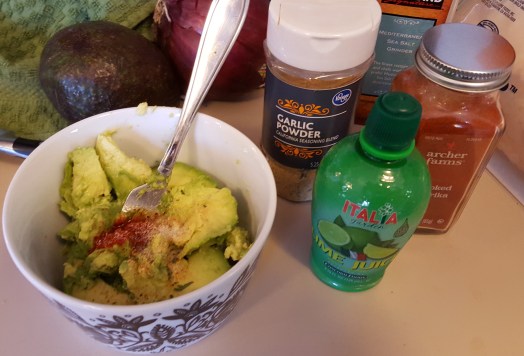
homemade guacamole

I rip up a small handful of coriander leaves left from the soup, avoiding stalks for this fresh side dish, and mix the leaves into the guacamole for a final smashy stir. I like my guac with bits of avocado, but you can smash until it’s completely smooth if you prefer. Best to taste test with a corn chip so you don’t go overboard with the salt.

If you’re feeding a crowd, amp up the quantities and I guarantee the guacamole will be gone by the end of the night. I usually put a tower of bowls, pile of spoons, a bowl of shredded cheese with the chips and guacamole beside the pot of soup at a party and let folks serve themselves. My kids will happily eat the soup over rice (drain the broth a bit), and my son likes smashing the chick peas in his bowl. It’s another fabulous, veggie-packed meal they scoff without hesitation. And if you’re sick of chicken soup, give this one a go … it’s sure to clear your head!

Mummy in a Tutu

Parenting skills I didn’t know I needed

I’ve got a little bit of blogger’s block. I’ve been trying to think of something vaguely funny to write to offset some of my serious posts. It occurred to me that there are all sorts of parenting “soft skills” that nobody talks about. Those little things you do all the time when you have kids, but you never ever did before you had kids. Nor did you ever anticipate that you would need to do such things.

parenting-skills


  1. Scraping toothpaste off of things (e.g. the sink, my bra, the cat)
  2. Jumping over toddler gates in the middle of the night (because those things are impossible to open when you’re half asleep)
  3. Explaining why you shouldn’t rest your penis on the sink (But why, mummy? I love to put it there!)
  4. Explaining why you shouldn’t put your finger up your bum (You shouldn’t, right?)
  5. Explaining why you shouldn’t put your finger up the cat’s bum (that poor cat)
  6. Defrosting and cooking sausages (the only thing they’re guaranteed to eat)
  7. Cutting teensy tiny nails without drawing blood
  8. Distinguishing poop from chocolate (harder than you might think)
  9. Cleaning crayon off of windows (impossible)
  10. Phonics (those things m-m-m-make no ssss-sense to me)
  11. Extricating back-arching toddlers from narrow behind-the-sofa hiding places
  12. Cleaning up a poonami without smearing it all over the wall
  13. Using a screwdriver to replace musical mobile batteries at 4am
  14. Carrying a handbag, changing bag, shopping and a wriggling toddler at the same time
  15. Carrying tired preschooler up hills at speed to reach toilet in time
  16. Secret kitchen biscuit consumption whilst preparing fruit for children
  17. Never leaving the house without snacks and wet wipes
  18. Not getting stuck when fetching children off playground/soft play equipment
  19. Oceans of patience and self-control
  20. Remembering to get lots of cuddles before they turn into stinky teenagers

Can you relate to any of these? What are your unexpected parenting skills?

Tammymum
Keep Calm and Carry On Linking Sunday

Birthing babies is a messy business – my postnatal anxiety

I’ve mentioned before in my breastfeeding post about the traumatic birth I had with my first son. Without going into too much detail here, I was induced, I had an emergency c-section and he was in special care with pneumonia for 10 days after he was born.

This all threw me for a massive loop. I had planned a natural water birth with only gas and air in a midwife-led birthing centre. I’d been doing pregnancy yoga and was convinced my body was a childbearing temple and I could have the birth I wanted if only I thought positively about it.

What a load of bull!

I had a drip and was strapped to a foetal monitor which kept bleeping in alarming ways that made me think my baby was dying. I had an epidural after being pricked in the spine countless times, and finally was rushed to theatre (after 20 hours of labour). I was so scared and addled during the surgery that I sang all the songs from The Sound of Music to my anaesthetist. Apparently, that was a first for him – but he was quite young.

And I hadn’t even considered, nor had anyone mentioned to me, the possibility of my son going to special care and being in one of those plastic oxygen boxes. I thought that only happened if your baby was premature. Turns out, special care happens to loads of mums for all sorts of reasons. But nobody warns you ahead of time.

Birth trauma and its effects

By the time I finally brought my son home from hospital, I was seriously messed up. I was convinced he was going to spontaneously die. We couldn’t fit his cot in our bedroom, so I slept in the nursery with him (away from my husband). I lost so much sleep, staying awake listening to make sure he was still breathing.

I remember that every night I would go to sleep repeating to myself, “Please God let him be okay. Please God let him outlive me. Please let him grow to be an old man.” My anxiety about his survival was all consuming.

And other times, when he had colic and wouldn’t stop crying, I wanted to throw him out of the bloody window. And as soon as that thought crossed my mind, I would be overtaken with guilt.

When I think of myself back in those days, I see a woman walking around in a sleep-deprived haze of constant anxiety around my baby’s well-being. Who couldn’t go on a buggy walk without me stopping to check on him every couple of minutes. I hated his rear-facing car seat because I couldn’t see him – we had to buy a mirror.

When well-meaning people would try to hold him or feed him a bottle, I was liable to hover and even yell at them, criticising their techniques – even though these were people who had children of their own and knew what they were doing.

I wore the same clothes day and night – a nursing top and baggy elasticated-waistband trousers. They were inevitably covered in baby sick and the crumbs from my attempts to eat toast without putting the baby down.

I was lonely but I couldn’t maintain a conversation. The days and nights ran into one another. Each day it seemed like I’d be stuck forever in my dark living room, curtains drawn, trying to soothe my screaming baby. Each night was spent begging forgiveness to the universe for being such an ungrateful and unworthy mother.

When I look back at the woman I was in those early days of first-time motherhood, I almost don’t recognise her.

Getting better

I never sought any help for my condition. I didn’t realise it was a problem. I thought it must be normal. In retrospect, I know it wasn’t normal.

As time passed, the trauma of my birth and my son’s illness faded.  Eventually, my son started crawling. Seeing him be independent and robust relieved some of my anxiety. By the time he was 1, I was feeling more like myself.

I was lucky that I got better in my own time. But it would have been much better if I’d realised what a state I was in and that there was help out there for me.

That is why this is the first post in what I’m hoping will become a series on maternal mental health. My next post will deal with the PND I had after my second son. And then I’m hoping to commission guest posts on the topic. Not just on diagnosed PND or anxiety, but about any mental health challenges you might have faced as a new mum. These could be shared on my blog anonymously if you like, or you can put your name to it.

If you would like to contribute a post on maternal mental health, please email me at themumreviews (at) gmail.com.

If you are feeling down, anxious, lonely or depressed after having a baby, you are not alone.

You can find support and information on http://www.pandasfoundation.org.uk/. Please also consider speaking to your GP or health visitor, and seeking support from family and friends.

My Petit Canard
Tammymum
Keep Calm and Carry On Linking Sunday

Casting call: Actors needed to play the role of parent

This post might be controversial. Maybe people will totally judge me over it. But I am over worrying about being judged … and this post explains one of the reasons why.

Picture this:

You’re in the park and your son is playing confidently on the equipment designed for his age group. You’re chilling on a bench nearby – maybe you even check your phone. Another mum turns up and is keeping close to her son as he climbs the stairs, and she always catches him at the bottom of the slide. All the time she is talking to him loudly in a conversational tone, loudly encouraging him to continue being totally awesome at playing in the park.

What do you do?

If the answer is carrying on doing what you’re doing, then well done. You may be immune to the scourge of acting like a parent.

But you know what I’ve been known to do? I start copying the other mum I see at the park. I go and stand near where my son is playing, talking to him and stuff. Because I (almost subconsciously) worry that the other mum will judge me if I don’t.

I react to my instinct that in public I must parent in a way that other people – especially other parents – will approve of.

Do you ever change your natural parenting behaviour when you’re in public? Do you start acting like you think other people want you to? Some examples I see and/or do every day:

  • Correcting my children loudly when they misbehave in public, so that others know that I’m not letting them get away with it. But NEVER shouting.
  • Being excessively involved in my children’s play when I have an audience.
  • Acting more attentive than normal in making sure my child doesn’t fall over or otherwise sustain an injury. Hovering. Otherwise someone might think I am neglectful.
  • NEVER leaving my children alone in the car, not even for a moment while I put my trolley in the trolley park. Even if this means dangerously carrying armfuls of groceries along with a child and any number of other items.
  • Making loud comments about limiting screen time when they play with their tablets in public.
  • Worrying about whether others will approve of what food I feed my children. Making excuses for biscuits.

The parenting performance

I am perfectly happy with my parenting techniques that I use in private. There’s nothing wrong with them. And yet I almost compulsively adjust them in response to what I perceive as other people’s expectations. I’d be surprised to hear that I’m the only one.

Modern-day parenting is full of the expectation of being present and accounted for. “Helicopter parenting” is the fashion. We make sure our children are well-behaved and polite, are fed healthy food, play with educational toys, bathe regularly, brush their teeth, and are never put in harm’s way. Of course we do those things. I can’t speak for others, but I suspect I’m not the only one who’s totally insecure about this. I know I’m doing the right things, but I am so worried that other people think I’m doing it wrong.

And so my public parenting has become a performance. I feel as though every time I go in public, I’m walking onto the parenting stage.

I’m so over it

Is it all in my head? I don’t think so, actually. I’ve been known to judge other parents. I’ve heard other parents judging other parents. I’m almost certain that people sometimes judge me.

It’s human nature to be judgemental. We can’t judge people for being judgers because that just creates a big ugly judge-y snowball.

What we need – what I need – is confidence. Most parents are doing the best they can with the tools they have. We need to believe this about ourselves. Letting go of our parenting insecurities will make us happier – and happy parents raise happy children.

Parenting is hard enough without worrying about what other people think. So the next time you’re at the park – go ahead and hover if it makes you happy. But not because you think that the mum over there checking her phone thinks you should.

A Mum Track Mind
Quite Frankly She Said Sunday Best
My Petit Canard